If you’re reading my website, it’s probably because you think something could be different…
Sometimes we know we need help, but taking the first step is not always easy. Often there is a conflict inside: one part of us recognises it needs a change and longs to move forward, while another feels fear or doubt, or cannot bring itself to ask for support.
The reasons can be many: emotional blocks, learned beliefs, hard experiences, shame — or simply having tried to pull through so many times that we have started to lose hope.
When we ignore, avoid or suppress what we feel, those experiences do not go away. They often find other ways to speak: through physical symptoms, rigid emotional patterns, or in our relationships with other people, with the world and with ourselves. We often hear that “time heals everything”, or that it is enough to “turn the page”.
My experience, though, has taught me that the passing of time on its own does not transform pain. As a friend once said to me: “To turn the page, you first have to read it.”
I hope these words spark your curiosity to explore new perspectives, and encourage you to take the first step towards change.
Trying to deny what we feel creates a war inside us that makes it harder to move out of the state we are in.
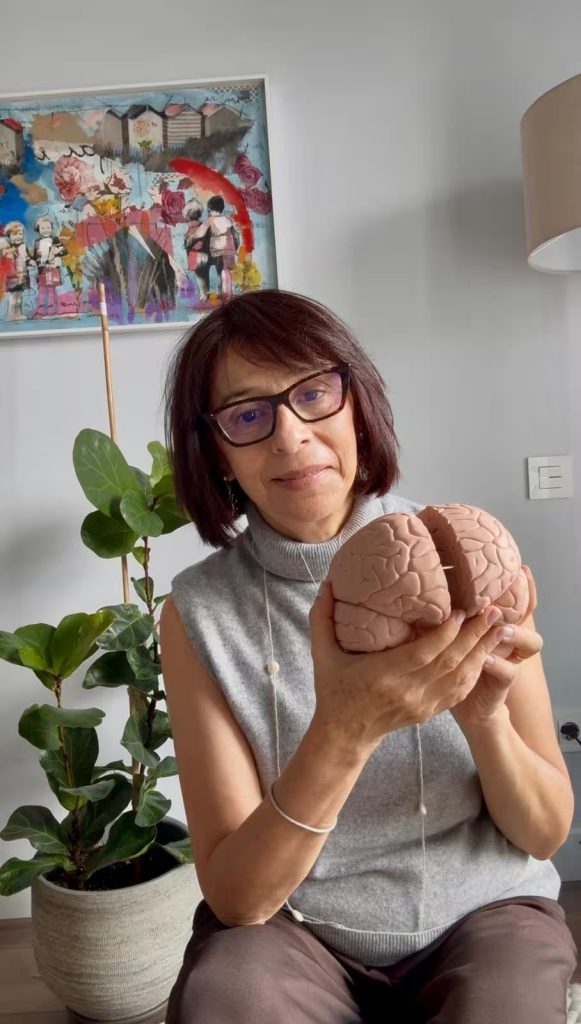
My story
I lived through the attack of 11 September 2001 in New York.
Years before, I had arrived in the city wanting to train and deepen my knowledge of trauma treatment. There I began working as a psychotherapist, precisely in the area where the attack happened.
Although I did not see the Twin Towers fall with my own eyes, I saw them fall hundreds of times through my patients’ accounts. That experience marked my professional life deeply and reaffirmed even more my wish to “accompany people who are going through the worst moments of their lives.”
I have now been working for more than 35 years as a psychologist specialising in trauma and grief. Some people ask me: “Don’t you get depressed listening to people’s sad stories all day long?”
The answer is no. Because when I listen to their worries I try to understand how the person is living and making sense of what they are struggling with. For me, those are clues that reveal the skills, strengths, experiences and resources they already have, the ones they need to develop, and the ones we need to work through.
We know that therapy does not change the past, but it can transform the way we relate to it. That transformation opens the door to new possibilities and allows us to live with greater freedom.

More than a CV
I am a psychologist, trained at the Pontificia Universidad Javeriana in Bogotá, with more than 35 years of professional experience accompanying processes of trauma, grief and transformation. I have lived in Colombia, the United States, Australia and Spain.
Being an emigrant has given me a broad and deep view of how our experiences, bonds and contexts influence the way we feel, relate and live.
Throughout my career I have trained with international leaders in trauma and the nervous system, among them Peter Levine, Bessel van der Kolk, Janina Fisher, Dan Siegel and Stephen Porges.
I am a Certified Addictions Counsellor from the University of Miami, an Expert in Psychotherapy and Hypnosis from the Erickson Societies of New York and Madrid, and I have specialised in trauma at NYU, among other training.
But there is something that goes beyond training, and that is the emotion of seeing how a person recovers hope little by little, reconnects with their resources and discovers that they can face what once seemed impossible.
Accompanying processes of transformation is one of my passions.

Treatments
How do I know if I am ready to start therapy?
Perhaps the question you should ask yourself is: how much longer do you want to keep suffering?
When we start treatment, you and I will co-create a plan with the measurable goals you want to achieve, the patterns you want to change and the events we need to work on.
Every session we have will be aimed at achieving them. Periodically we will review your progress and set new goals, until you know when it is time to “graduate” from therapy because all the goals you set have been met or are on their way to being met.
Understanding what is happening to you is part of the treatment. In our therapy, I will not just listen to you, we will also identify and release the central neurophysiological sources of emotional and physical pain.
You will learn to regulate your nervous system and to transform traumatic memories and negative beliefs that limit you.
Specialties
I can help when…

When relationships go wrong
- Do you get irritated easily with your partner, family, friends or people you know?
- Are you afraid of being abandoned?
- Do you find it hard to commit?
- Have you been unable to close a relationship?
- Are you in a relationship even though it is not good for you?
- Do you feel you are not enough?
- Are you controlling, or submissive, in your relationships?
We are programmed by the family we came from to react this way.

Fear, Anxiety, Depression
- Flying
- Speaking in public
- Coming out
- Abandonment
- Illness
- Surgery
- Loneliness
Fear does not leave unless you understand it, hold it and work it through. When the fear settles, you can begin to live in the present.
Grief and bereavement
The death of someone you love, the loss of your health or your work, can become so stressful, so painful, so traumatic that it exceeds the natural limits of what we can take in and carry.
It disturbs our ability to respond, leaving feelings of helplessness, emptiness, abandonment, fear, sadness, guilt and confusion. Intrusive images of the moment can come too.
“The healed wound is not the forgotten one — it is the one you remember without pain.” D.G.
Sexual abuse
Some people who were abused as children do not remember it happened. The very defences that protected them at the time lock the whole painful, shaming experience away somewhere “safe”, and keep a memory that carries so much feeling from being remembered at all.
I read somewhere that “when a child’s innocence is stolen by sexual abuse, it affects self-esteem, the development of personality, socialising and achievement.” Later it can affect their intimate relationships.
“No one can do it alone, but no one can do it for you.”
Peter Levine
Testimonials
For years I lived with panic attacks and anxiety. Since childhood I had trouble concentrating and paying attention.
POST-TRAUMATIC STRESS — María Luisa Flores
Blog
-
Testimonials About the Safe and Sound Protocol (SSP)
Are you wondering whether the Safe and Sound Protocol (SSP) really works?
-

Do you know the SAFE AND SOUND PROTOCOL, or *SSP?
FEELING SAFE IS NECESSARY TO LEARN AND RELATE TO OTHERS
-

WHAT IS POSTPARTUM DEPRESSION?
Postpartum depression happens for several reasons.
Sometimes, change begins before you take the first step